
By: Tarquin de Burgh
It’s a long, long way to Argentina to see suppliers when you travel from Scotland. Edinburgh to London, London to Rio de Janeiro, then on to Buenos Aires and finally landing in Mendoza – that’s 20 ish hours of in-flight movies, part watched box sets, terrible food and loos which after several thousand air miles should come with a government health warning…once you get there though, the pressurised tube of hell is quickly forgotten and post immigration, it’s time to pick up the hire car.
If you’re a nervous driver, you’ll need to put your grown-up pants on as anything goes, indeed anything with an engine that still goes is on the road in Argentina. It’s a bit bonkers, roads vary from immaculate tarmac in BA to cobbled streets, potholes you can hide a Fiat 500 in (in the middle of motorways) to gravel and sand roads in the desert which kick out so much dust from behind your car, that the team on the international space station can pin point you…once you relax into it though, it’s really quite a lot of fun.
The people here are wonderfully welcoming and justifiably proud of their incredible country. The cities are stunning—from the colonial charm of Salta to the distinctly French feel of parts of Buenos Aires—while the countryside in the Uco Valley, Cafayate and Tilcara will quite literally leave you speechless with jaw-dropping scenery.
There is a lot of poverty, which makes you wonder how more people aren’t angrier about it. Argentina should be a rich country. In fact, around 1900 it was one of the richest in the world. The country is blessed with extraordinary natural resources and produces food on a massive scale. It is one of the world’s largest producers of soybeans, grows an abundance of fruit, and has vast mineral reserves. Its wine industry is thriving, it remains a major agricultural exporter, and its petrochemical sector is significant too.
For many years however, corruption and poor economic management meant that much of the wealth created by hardworking Argentinians never fully benefited the country.
Many locals now speak about change under President Milei. Inflation, which once ran above 200%, and has now fallen sharply to around 30% (we complain about 4%) and continues the trend downward. Government spending has been cut dramatically and, for the first time in many years, Argentina is running a budget surplus. Whether these reforms will fully transform the country remains to be seen, but there is a genuine sense that Argentina may finally be turning a page.
The police are everywhere; we got stopped late one night for a breathalyser test, it’s 100% zero tolerance here, so if you’re the designated driver, don’t eat Tiramisu for pudding…. Our driver and host had tasted us through several wines from his estate 3 hours earlier and used a spittoon, but you could feel his adrenaline from the passenger seat as he blew positive on test one and then THANKFULLY negative on test 2…we laughed about it as we drove away that in the old days, had he been drinking, a brown paper bag with lots of pesos enclosed would have solved the conundrum but the reality is the people want this control, it’s making their country much safer and straighter, times are really changing!

We visited many producers, too many to fully report back on in this blog, so to keep this as concise as possible (which is hard to do after three weeks) here are my highlights of the trip during our time in and around Mendoza with one producer from Patagonia.
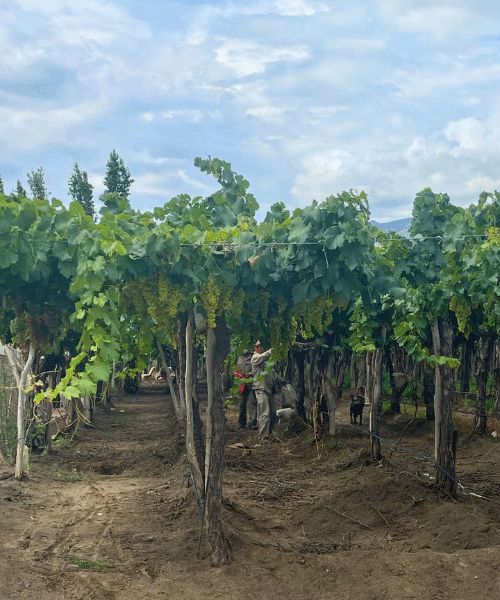
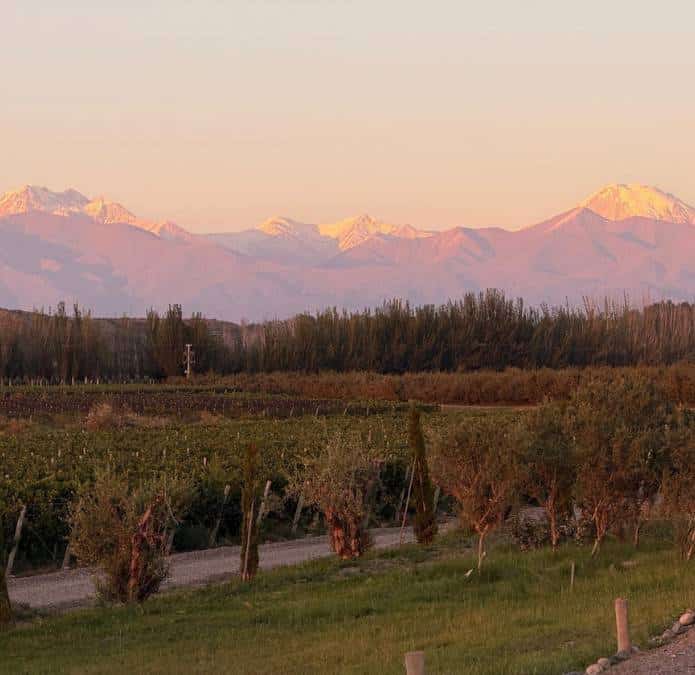
We spent most of our time in Mendoza and Uco, which is technically a desert. Here the vineyards rely heavily on meltwater from the Andes, channelled through a network of irrigation canals built centuries ago. It’s much the same across most of Argentina’s wine regions—the Andes are what keep agriculture alive here.
Producing a single litre of wine requires roughly 1,000 litres of water. That might sound a bit nuts, but drip irrigation runs throughout the growing season, and wineries themselves need significant amounts of water on a daily basis for cleaning tanks, barrels and equipment.
Vineyards sit at elevations as high as Ben Nevis, and it’s amazing how green it is, especially in the Uco. Despite the altitude, daytime temperatures can reach 32°C, while evenings cool to a lovely 18°C, and most mornings you even find yourself reaching for a jumper. In many, many years of spending times in vineyards all over the world, conditions like this are truly unique!
Those cool nights are ideal for the vines. They help thicken the grape skins, making the fruit less susceptible to disease and pests, while also boosting aromatics, riper tannins, texture, and turbo flavouring the fruit too.
We spent two days with the team at Bodegas Atamisque who we have worked with for almost 10 years. It was awesome to reconnect, and taste through new vintages and a few older ones also. There has been a LOT of investment over the years, especially in the vineyards and it shows. They pick all their grapes by hand from ancient vines, mostly at night to keep the fruit clean – crushed hot fruit = oxidation. Once it arrives in the winery, everything is moved around by gravity and not pumps so the fruit is never bruised. The winery itself is sparkly clean, there’s lots of Inox, a form of stainless steel for vinification, and ageing and there are various sizes of French oak for ageing their top cuvees in. Nothing is rushed and so not surprisingly, their wines have a ripeness and elegance which for the money, are hard to beat. The “Serbal” range is all about silky fruit, balance and fine-grained tannins, they are all 100% unoaked. The Malbec and Cabernet Franc are spectacular, with the Chardonnay and Pinot Noir super refined and classy. The “Catalpa” range are their oak-aged expressions and are extremely pure. For me the Malbec and Cabernet Sauvignon really shine, they are both deliciously round, supple and wonderfully voluptuous. If I can choose one word to link them all together it has to be “Purity” they are classy things to drink.

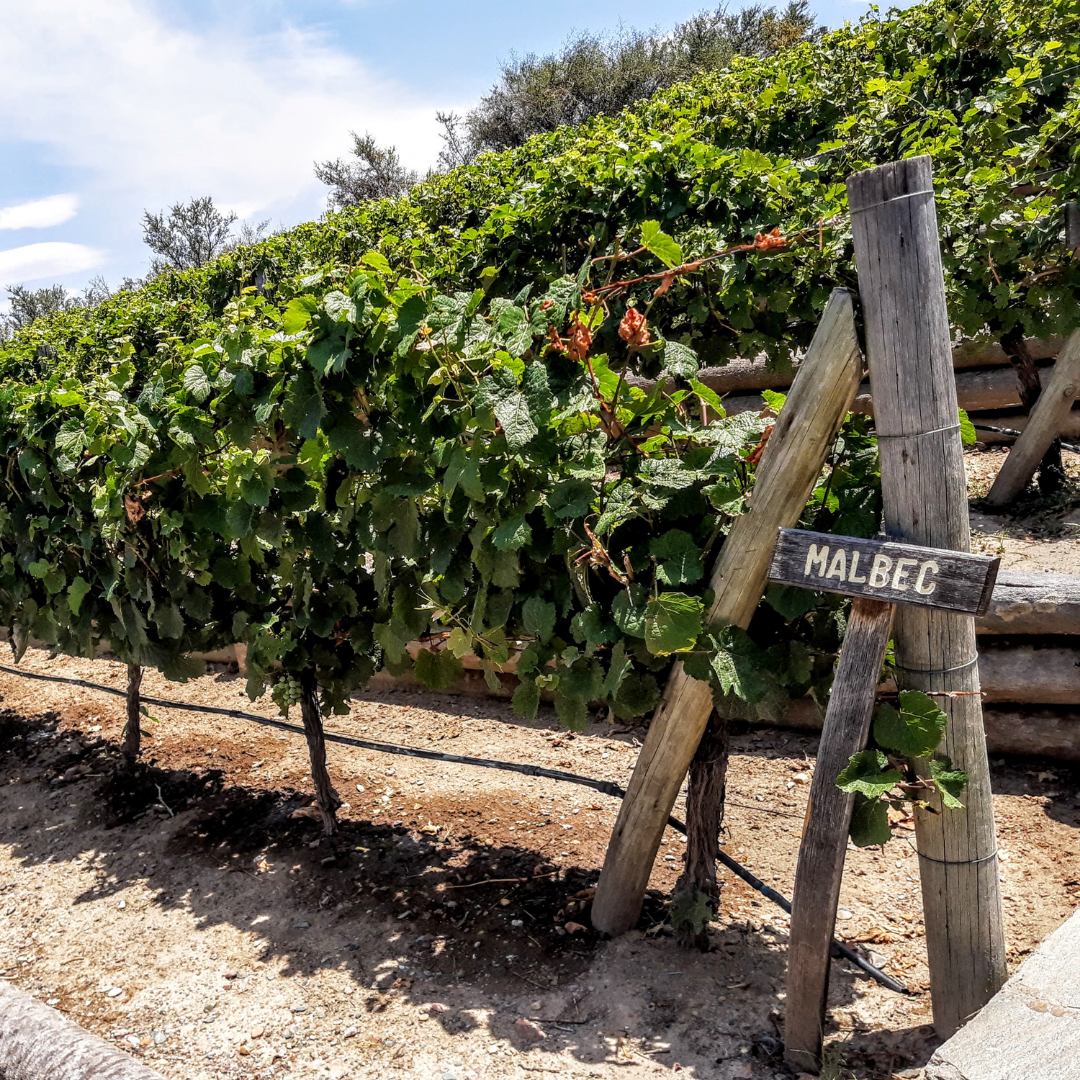
The following day we popped in to see two brothers at Bodegas Flor Silvestre who put on an excellent show. They own 17 different plots of vines in Tupungato, Tunuyan and San Carlos and as they walked us through the winery and some of their vineyards, it was obvious that these two brothers are seriously focused and on a mission, their energy is infectious and attention to detail surgical. After a great tour they tasted us through some fabulous wines. A Malbec (obviously) Cabernet Franc, Sangiovese, (their grandfather was Italian) all of which were succulent and silky with amazing finesse and properly well made. A fleshy, perfumed, pink grapefruit styled Torrontes which finished dry – I normally loath Torrontes, but this was superbly tasty and finally, a fabulously delicious lees stirred Semillon. We don’t ship these as yet, but keep your eyes peeled, they are too good not to!
https://florsilvestre.com.ar/en/home/
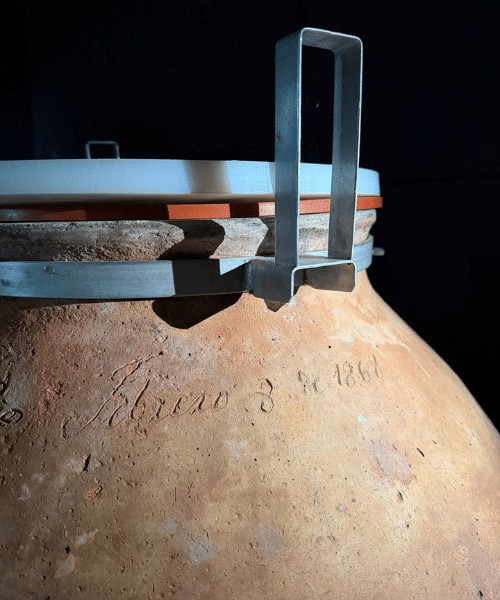
Nestled in the middle of all of these amazing vineyards and wine makers is Ver Sacrum, a completely unconventional setup, with a focus on European varieties. Overseen by Eduardo Soler these wines have reached cult status. He and the team focus on sculpting bonkers wines out of Grenache, Nebbiolo & Mencia amongst others. Their aim is to “bottle the vineyard” and anything they do is about low intervention, so the wines are sharper, fruit driven, more linear. With a belief that oak smothers fruit, concrete is the vessel of choice for ageing purposes and thus their wines are superbly precise. They are not fruit bombs and need time in a glass like a fine Burgundy so that they can open up and develop.
I often find New World Pinot Noir a little forced, but Patagonia is widely regarded as the place in Argentina to grow this notoriously difficult grape.
Founded in 1927, Bodega Aniello is a boutique winery in the Upper Río Negro Valley of Patagonia, one of the southernmost wine-producing regions in the world. Here, traditional Italian winemaking heritage meets the distinctive terroir of Patagonia.
As in the Uco Valley, the region’s dry climate, persistent winds and wide day–night temperature swings create ideal conditions for producing grapes with concentrated flavours, bright acidity and aromatic complexity. These natural advantages allow winemaker María Cruz de Ángelis to craft wines that are fresh and elegant yet fleshy, with depth and beautifully velvety tannins.
Her Pinot Noir bursts with wild red fruit on the nose, which carries seamlessly onto the palate, supported by sweet, succulent tannins. The Malbec, meanwhile, is juicy and mineral-driven, showing black cherry, blueberry and hints of lavender. With around 30% of the wine aged in French oak for 12 months, it’s a joy to drink—especially with a whacking great beef chorizo and a green salad, the latter not always the easiest thing to find in Argentina.
Epilogue – I really want to get these two points across – please, please serve your red wines just a little colder than you think they really should be, 12 deg C, no more. Often during our visits in Argentina the producers served their wines straight from a standard fridge, and they showed so brilliantly. Fruit and tannins were succulent and soft and juicy and alcohol hardly showed at all. Far too often we serve red wine too hot so please, chill it a little and let the fruit sing! It’s always easier to warm a glass up than cool it down…and most importantly, surprise, surprise, if it’s Malbec you love, Argentina does it on steroids and better than anyone else…
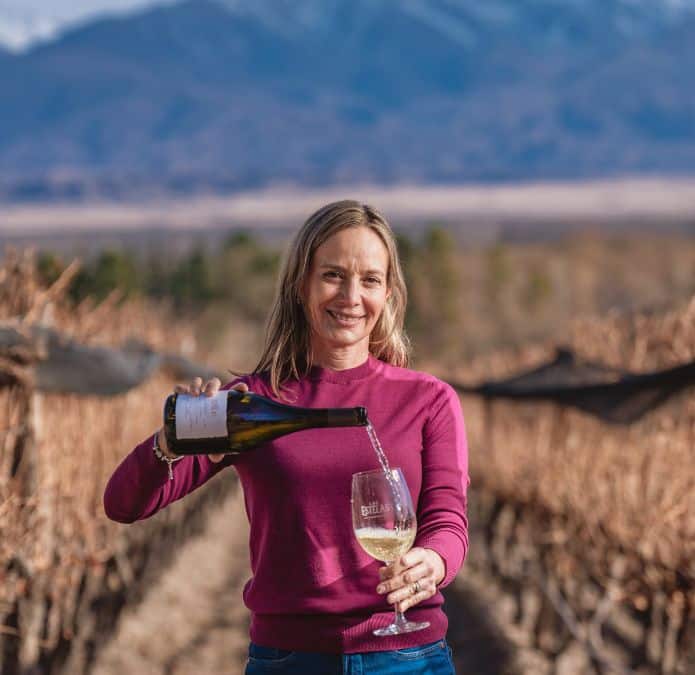
15% OFF ARGENTINIAN WINES
To celebrate Tarquin’s trip, we have decided to showcase the exceptional wines this country has to offer. This is a perfect opportunity to explore the various styles of Malbec for which Argentina is famous.
In addition to the fabulous Malbecs, consider trying a different grape variety, such as the delicious Cabernet Franc from the excellent Atamisque (an estate which was a particular highlight of Tarquin’s) or the Pinot Noir from Aniello. Don’t forget to explore the outstanding sparkling wines as well, including a delightful rosé from de Rochebouet.
Related Posts